

.png)



.png)
Article
AI Chat vs Live Chat for Tourism Operators: Which Is Right for Your Business?
A guide comparing AI chat and live chat for tour operators — and why most are choosing both.



Nobody likes getting a 3-star review.
You read it twice. You try to figure out who it was. You replay the day in your head wondering what went wrong. And then (if you're like most operators) you write a response, move on, and hope the next group has a better time.
That's a completely human reaction. But it's also a missed opportunity; that 3-star review isn't just feedback from one unhappy guest. It's a data point. And if you've got 47 more sitting in your review history saying variations of the same thing, you're not dealing with a bad day. You're dealing with a pattern.
The problem is that most operators don't have time to read 47 reviews looking for patterns; they're too busy running tours.
That's exactly where AI earns its place.

Most tourism businesses think about reviews in terms of reputation. How do we look? What's our rating? How do we respond to the negative ones without sounding defensive and petty?
That's legitimate. Your rating matters. How you respond matters.
But underneath the star score, reviews are actually one of the richest sources of operational feedback you have. Guests are telling you, in specific, unfiltered detail, exactly what's working and what isn't.
The pickup was confusing. The wetsuit didn't fit properly. The guide was fantastic but the safety briefing felt rushed. The post-trip communication was great but the pre-trip information was vague.
That's not just reputation management material. That's an operational checklist.
The challenge is extracting it efficiently. Reading through hundreds of reviews manually and trying to identify themes is genuinely time-consuming. And when you're running a seasonal business with a small team, that kind of analysis rarely makes it to the top of the priority list.
Yonder's AI smart summaries do something simple but genuinely useful: they read across your reviews and surface what's actually being said.
Not just sentiment. Not just "mostly positive." Specific themes, repeated across multiple guests, presented in a way that makes the pattern obvious.
Instead of scrolling through 60 reviews trying to remember which ones mentioned the booking process, you get a clear picture. Guests are consistently mentioning long wait times at check-in. Guests love the guides but frequently mention confusion about what to bring. Positive mentions of the scenery are high; mentions of the post-trip experience are almost absent.
That's actionable. In a way that "your average rating is 3.8" simply isn't.
And because the summaries update as new reviews come in, you're not doing a quarterly audit and hoping things have improved. You're watching in real time as operational changes start showing up in what guests are saying.
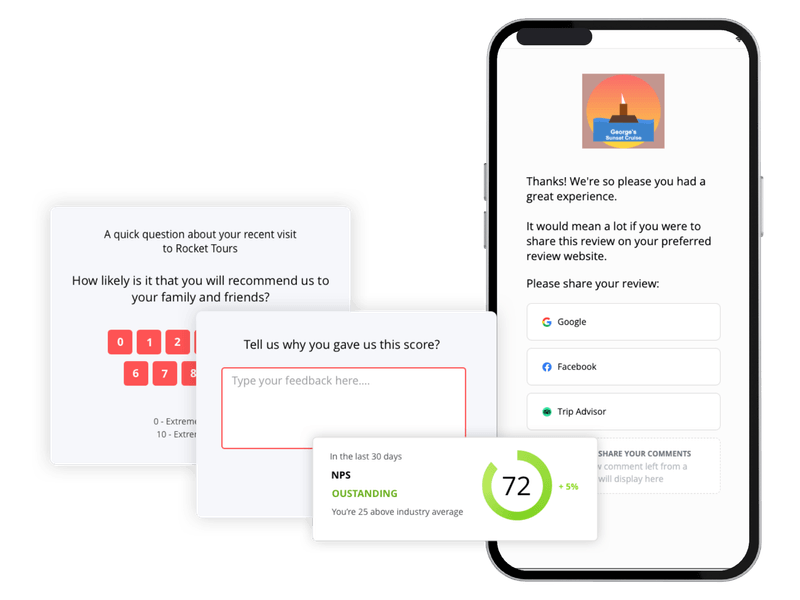
Reading smart summaries is only useful if it changes something. Here's a straightforward way to build review insights into your operational rhythm.
Monthly: Scan for new themes.
What's coming up this month that wasn't showing up last month? A new staff member, a change in itinerary, a new supplier — these things often show up in reviews before they show up anywhere else.
Quarterly: Look for persistent patterns.
What themes have appeared in three consecutive months? Those aren't anomalies. They're systemic. Pick one and fix it before the next season.
Annually: Do a proper before/after comparison.
If you made an operational change based on review feedback (such as new pre-trip email, adjusted group sizes, updated gear) did it move the needle? AI summaries let you track whether the language around that issue has shifted.
This doesn't need to be a formal process with a dedicated team. It needs to be a habit. An hour a month looking at what your guests are actually telling you is one of the highest-value things a tourism operator can do.
One thing operators sometimes overlook: how you respond to reviews is part of your reputation, not just damage control.
A thoughtful response to a 3-star review — one that acknowledges the specific concern, explains what you're doing about it, and thanks the guest genuinely — tells every future guest reading that review that you're paying attention. That you care enough to respond specifically, not just paste a template.
That matters more than the star rating in a lot of cases –travelers are smart! They read responses and they know when a business is brushing off feedback vs genuinely engaging with it.
Yonder's AI can help you draft responses that are on-brand, specific, and optimized for AIO and SEO — without your team spending 20 minutes on each one.
Reviews are the most direct feedback loop you have. Guests are telling you, in plain language, what would make the experience better. Most of that feedback doesn't require a big investment, just attention.
AI smart summaries make paying that attention realistic for a small team running a busy operation. You don't need to read every review; you need to understand what your reviews are telling you — and then do something about it.
\Yonder's review management tools help tourism operators spot patterns, respond faster, and turn guest feedback into real operational improvements. Want to see how it works for your operation? Book a demo today.



.png)


