
.png)



.png)
Article
AI Chat vs Live Chat for Tourism Operators: Which Is Right for Your Business?
A guide comparing AI chat and live chat for tour operators — and why most are choosing both.



Summer is the season many tourism operators builds their whole year around.
... It can also be the season that exposes every crack in your operation.
More inquiries. More calls. More last-minute questions. More guests arriving at the same time, all wanting great experiences, some of them booking the night before on their phones. Your team is stretched. Your inbox is full. And somewhere in the midst, bookings are slipping through gaps that didn't exist in February.
The good news: the summer rush is predictable. Which means you can prepare for it.
And from 2025 to today, the data on how US travelers actually book tells you exactly where to focus.
Here's what the research says, and what to do about it before peak season hits.
This is the biggest shift operators need to wrap their heads around right now.
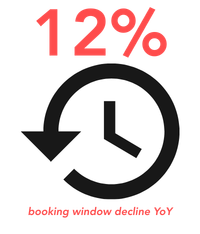
Guests are now booking on average 26 days in advance, a 12% decline year-over-year. That signals more last-minute travel behavior, likely driven by economic uncertainty or increased booking flexibility.
For tour operators and adventure outfitters, the window can be even tighter. A growing number of travelers are booking within 24 to 48 hours of a tour, especially for activities in cities and popular destinations.
What does this mean practically? It means the old model of filling your summer calendar well in advance is becoming less reliable. More of your bookings are now happening in real time, from people who decided this morning that they want to go kayaking tomorrow.
If your availability isn't visible instantly, and if there's nobody available to answer the question at 9pm on a Tuesday, that booking goes to someone who is ready.
Before we get into the gaps, some good news worth knowing.
A higher percentage of Americans are traveling this summer and staying in paid lodging — 53% in 2025 compared to 48% in 2024. And Americans plan to spend an average of $3,471 on their longest summer trip, a 13% year-over-year increase.
Adventure travel specifically is in a strong position. In one scenario, the majority of adventure travel operators reported increased revenue, with an average projected increase of 26%.
Adventure travel remains a strong third among vacation types, chosen by 17% of travelers — and for those booking with a provider; cost, local guide expertise, equipment availability, and reputation are the key decision drivers.
.png)
The demand is there. The question is whether your operation is set up to capture it when it arrives (often with little warning and high expectations!).
Understanding who's actually booking this summer matters a lot for how you position and communicate.
Households with children are much more likely to be planning a trip compared to those without kids. Families are a major driver of summer demand, and they tend to ask more questions before booking — about safety, suitability for ages, what to bring, what happens if it rains.
Americans are opting for longer getaways, with the average length of stay rising by 9% year-over-year to 10 days, and traveling in larger groups, with average group size increasing slightly to 5 guests per booking.
Larger groups mean more complex inquiries. More people need to agree. More questions come from different time zones. And group travel is booming — though not in the way of the massive bus tours of the past. These small groups often consist of friends, colleagues, or participants in niche interest trips, embracing personalized travel with like-minded individuals.
Meanwhile, travelers today are more informed and tech-savvy. They want digital access, clear pricing, and flexibility. Mental wellness, ethical tourism, and customized experiences matter more.
Put it all together: your summer guests are arriving in bigger groups, staying longer, booking later, asking more questions, and expecting fast answers on whatever device they're holding.
That's a lot to manage without the right systems behind you.
Here's where things tend to go wrong – and none of it is unique to one type of operator.
The inquiry flood hits before your team is ready.
Memorial Day weekend is the unofficial starting gun for US summer travel. The searches and inquiries that start building in April and May don't wait for your team to scale up. Shorter lead times can make it more difficult to project seasonal performance, but they do suggest new opportunities for in-market advertising and capturing the undecided tourist's attention.
The catch: capturing that attention requires being available to respond. If your website can't answer availability questions and your phone goes to voicemail after 5pm, you're losing those inquiries to operators who are ready.
Repetitive questions eat your team's time at exactly the wrong moment.
During peak season, the same questions come in hundreds of times. What should we wear? Is there parking? Can kids join? What happens if the weather turns? What's included?
Every one of those questions answered manually by a staff member is time that could have been spent with an actual guest. Multiply that across a team already stretched thin during high season and you start to understand why so many operators limp through summer rather than thrive in it.
Late-night and weekend inquiries go unanswered.
Many travelers now rely on their smartphones to discover and book tours just hours or days before they take place. Social media, travel apps, and same-day discounts encourage last-minute decisions.
Those searches don't happen at 10am on a Wednesday. They happen at 8pm on a Friday when someone just decided they want to do something adventurous this weekend. If there's no one (or nothing) available to respond, that high-intent visitor closes your tab and opens someone else's.
Mobile visitors don't get the experience they expect.
70% of travelers use mobile devices to search for things to do, and 66% search for destinations. A website that isn't built to handle mobile booking inquiries efficiently isn't just inconvenient; it actively costs you conversions.
The operators who handle peak season well aren't necessarily bigger or better resourced! They've just closed the gaps that let bookings walk out the door.
1) They make availability visible around the clock.
This is foundational. Platforms like Google, Airbnb Experiences, and GetYourGuide have conditioned customers to expect instant availability. They want to book with just a few clicks and get immediate confirmation.
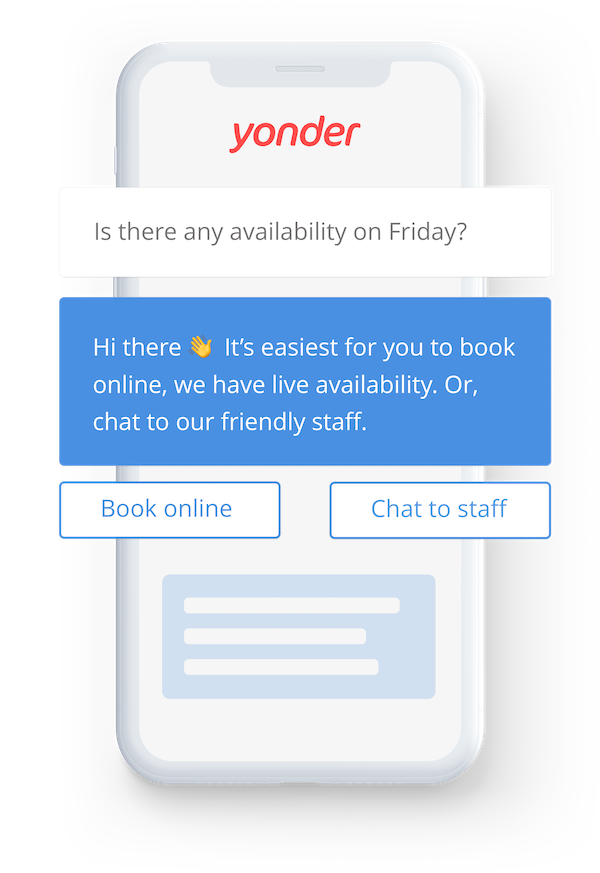
Your direct booking channel needs to meet that expectation. Live availability, visible on your website and answerable through chat or voice at any hour, is no longer a nice-to-have. It's the baseline.
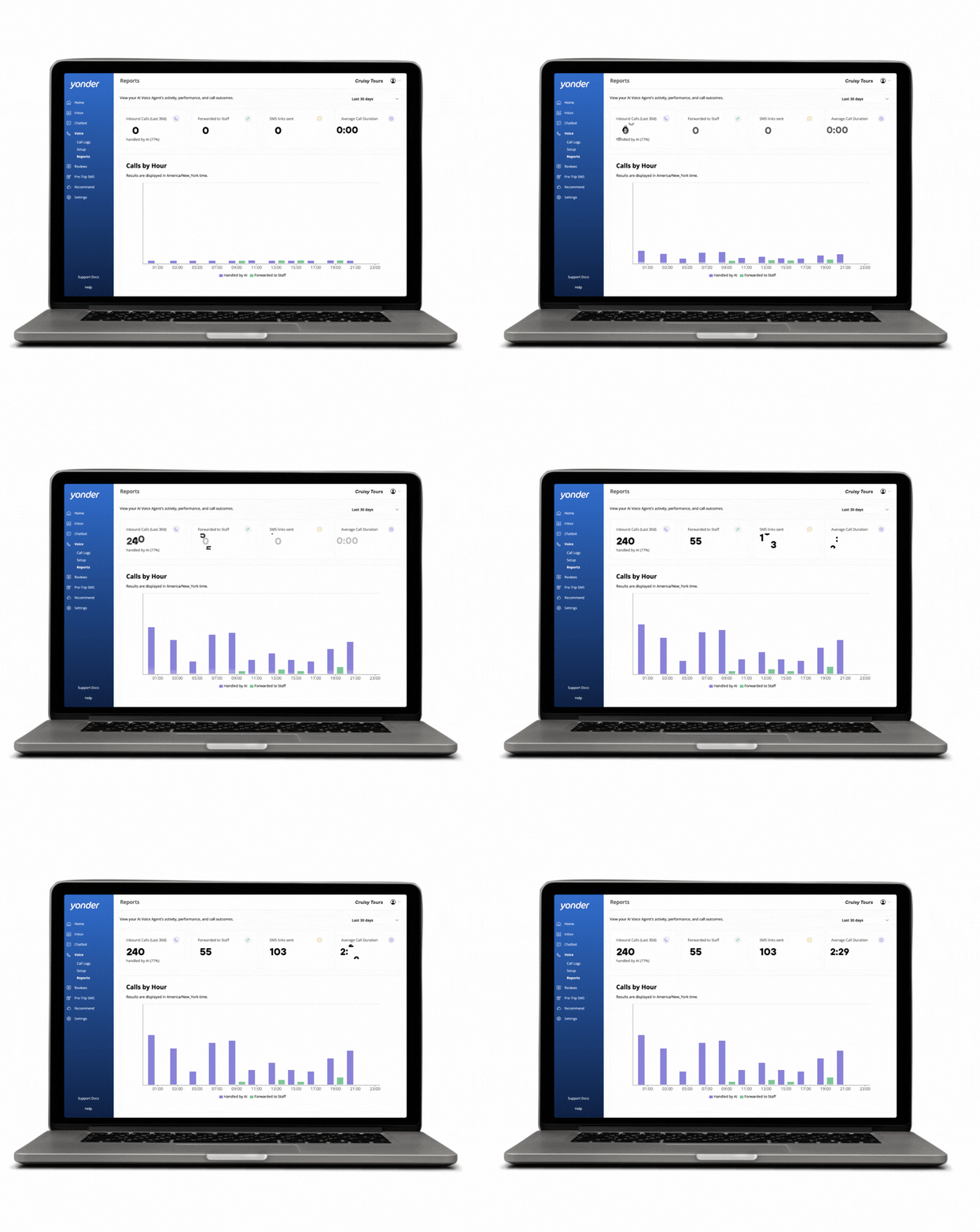
When Yonder's AI chatbot and voice agent are connected to your reservation system, guests get real availability answers instantly, whether they're browsing your site at midnight or calling during a busy Saturday morning when your team is hands-on with guests. No voicemails. No "we'll check and get back to you." Just a real answer, right then.
2) They automate the repetitive without losing the personal.
Think about what percentage of your pre-season and in-season inquiries are actually the same question asked by different people. For most operators, it's high — and that's actually a good thing, because predictable questions are automatable.
An AI chatbot trained on your tours, your policies, your FAQs, and your destination specifics can handle that volume without your team touching it. Your staff can focus on the guests in front of them. Complex, unusual, or sensitive inquiries get flagged for a human immediately. The routine ones get handled the moment they arrive.
3) They prepare pre-trip communications before they need them.
One of the clearest patterns in summer review data is that guests who arrive underprepared leave more frustrated reviews. They didn't know where to park. They didn't know what to wear. They didn't realize there was a minimum age. None of that is about the tour being bad — it's about the communication that should have happened before they arrived.
Building automated pre-trip sequences before peak season — clear, specific, timed to arrive 48 hours before each booking — costs almost nothing to set up and pays back consistently in better guest experiences and stronger reviews.
4) They capture late-minute demand proactively.
Shorter lead times suggest new opportunities for in-market advertising and eye-catching creative that can capture the undecided tourist's attention.
This is worth building a specific strategy around. A segment of your summer audience isn't planning ahead — they're searching right now for something to do this weekend. Last-minute availability promotions, retargeting ads to recent website visitors, and an always-available chatbot to answer questions at the moment of intent are all ways to catch that demand before it goes elsewhere.
5) They protect their direct booking channel.
Direct booking accounted for a market share of around 58% in the adventure tourism market in 2025. Travelers often prefer direct bookings for greater control over their itineraries, avoiding additional fees associated with third-party platforms.
That majority preference for direct booking is an opportunity. But only if your direct channel can compete with OTAs on speed, clarity, and ease. If a guest can get an instant answer on Viator but has to wait 24 hours to hear back from you directly, they'll book through Viator. Closing that response gap — with AI handling the immediate layer — is how you protect your margin and own the guest relationship from the start.
If summer is coming fast and you're wondering where to start, here's a practical sequence.
Right now: Set up or audit your AI chatbot and voice agent with this season's tour details, pricing, availability, and FAQs. Make sure it's connected to your live availability. Test it from a mobile device.
Four to six weeks before peak season: Build your automated pre-trip email sequence. One message at booking confirmation. One 48 hours before the tour. Keep them short, specific, and useful; packing list, directions, what to expect on the day.
Two to four weeks before peak season: Review last year's summer reviews and identify the most common points of friction. Fix what's fixable before the season starts rather than reading about it in August's reviews.
Ongoing through peak season: Check your AI chatbot and voice agent conversation logs weekly. What questions are guests asking that you haven't covered? Update your content in real time. This is live market research that most operators are sitting on without realizing it.
Most operators describe peak season as controlled chaos at best. Exhausting. Reactive. A sprint to get through.
It doesn't have to work that way.
The tools to handle summer volume without burning out your team exist and they're straightforward to implement. The booking behavior data tells you exactly where guests are making decisions — late, on mobile, outside business hours, often on the same day. Closing those gaps before the rush hits is the difference between a summer you manage and a summer that manages you.
Your guides should be on the water, on the trail, and in the moment with your guests. Not answering the same availability question for the 80th time in a week.
Get the systems ready now and get started with Yonder. Summer will take care of itself.




.png)


